

Loading
  • Link to LinkedIn
Call Us (919) 616-5240
Construction Safety Experts
  • Home
  • Safety Staffing
    • Safety Staffing Services
    • Project Safety Professionals
    • Audits
  • Locations
    • Southeast
    • Mid-Atlantic
    • Northeast
    • Mid-West
    • Southwest
    • Northwest
    • West
  • Crane Inspections
    • NCCCO Crane Operator Training
    • Crane & Rigging Safety Management
    • Qualified Crane Operator Training
    • Crane Inspections and Load Testing
  • Training
    • MSHA Safety Training
    • OSHA Construction Safety Training
    • NFPA 70E Training
  • Articles
  • About
  • Get a Quote
    • Raleigh
  • Menu Menu
Articles

Workplace Safety: Hearing Protection
June 28, 2022/in Safety Articles /by safetyexpert
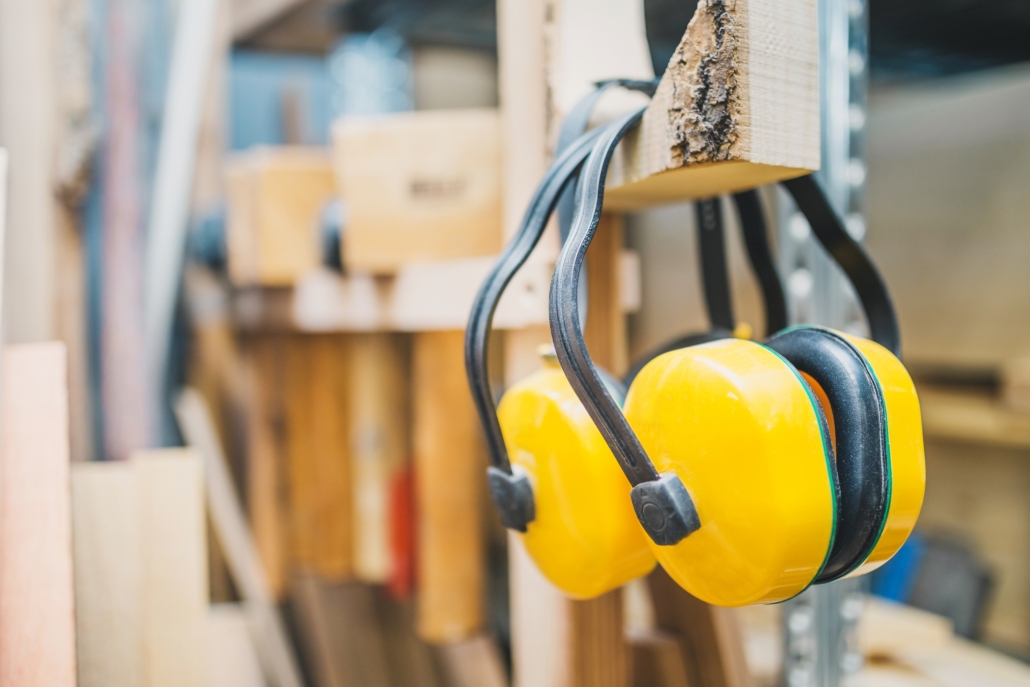
A supply backroom with two yellow protective headphones hanging on a shelf

Every company’s goal should be to create a safe and healthy work environment for their employees. One way to do that is to provide hearing protection. Here is why it is essential and the types available.

Why Is It Important to Wear Hearing Protection?

First, here are some statistics from the Centers for Disease Control (CDC) and the Occupational Safety and Health Administration [OSHA] regarding workplace hearing loss.

  •   Hearing loss is one of the most common illnesses on the job.
  •   Approximately 22 million U.S. workers are exposed to dangerous noise yearly.
  •   Occupational hearing loss is preventable.

What is “dangerous noise”? According to OSHA, any sound over 85 decibels requires hearing protection to avoid hearing loss. To better understand how loud that would be, here are examples of everyday sounds.

  •   Whisper – 30 dB
  •   Normal conversation – 60 dB
  •   Lawnmower – 80-85 dB
  •   Motorcycle – 95 dB
  •   Shouting or barking in the ear – 110 dB
  •   Firecracker – 140-150 dB

Any noise over 120 dB can cause immediate damage to your hearing. Once hearing loss has occurred, it does not come back. Even if the sound isn’t that loud, prolonged noise exposure can still cause problems, so it is crucial to wear hearing protection in the workplace.

What Types of Hearing Protection Are Available?

There are several choices when considering hearing protection. Choose one that is comfortable to wear and protects you from noise. Here are some common ones.

Expandable Earplugs

You can find this type of foam earplug in grocery stores and drugstores. This earplug style is easy to insert. Roll the earplug between your fingers until it is thin. Pull the top of your ear up and back to insert it into your ear canal. Then, hold the earplug in place until it expands. When sound is muffled, you have a good fit.

Pre-molded Earplugs

These earplugs are also inserted into your ear canal, but they are already shaped. Depending on the size of your ear, these might not be as comfortable as the moldable type. Another option is to have an audiologist make you custom-molded earplugs.

Earmuffs

Earmuffs have two hard cups with soft cushions on top held together with a headband. They completely cover your ears and are good at blocking out damaging sound. This is a good option if you do not like the feel of the earplugs.

Should Hearing Protection Be In Your Safety Plan?

Every business should have a safety plan that includes hearing protection. Contact Construction Safety Experts online or call us at (919) 463-0669 to create a customized safety program for your business.


Ready to improve existing safety programs? Develop a safety culture in your organization? Provide top quality safety programs?
Call Us! (919) 616-5240
Email Us!

Our Services

  • Professional Safety Staffing
  • OSHA Construction Safety Training
  • MSHA Safety Training
  • NFPA 70E Training
  • NCCCO Crane Operator Training
  • Qualified Crane Operator Training
  • Crane & Rigging Safety Management
  • Crane Inspections and Load Testing
  • Audits

Construction Safety Experts 30th anniversary logo with a yellow construction sign and a black banner

Construction Safety Experts, Inc.

Providing industry-leading safety staffing, crane inspections and safety training across the United States. Quality over quantity.

PO Box 1868

Cary, NC 27512

Contact Us

O: (919) 616-5240

M: (919) 632-1337

kyle.jackson@safety-xperts.com

Business Hours

Mon-Fri 8:00am – 8:00pm EST

24-hours or less response time to inquiries

Our Services

Safety Staffing

Crane Inspections

Safety Training

About Us

Meet CSE

Main Office

Recent
  • A man in a flannel shirt, jeans, and a high-visibility vest wipes his brow while holding a white hard hat.
    Managing Construction Safety Risks During Summer Projec...May 19, 2026 - 11:03 amin: Safety Articles
  • An overhead view of three construction workers in hard hats and vests leaning on a wooden table and discussing plans.
    Integrating Safety Planning Into Preconstruction Proces...May 12, 2026 - 2:09 pmin: Safety Articles
  • An aerial view of a large data center campus during the day with numerous cooling units, grass fields, and parking lots.
    Managing Electrical and High-Risk Work in Data CentersMay 7, 2026 - 1:38 pmin: Safety Articles
  • A close-up of a white paper attached to a clipboard that reads "OSHA" and "Occupational Safety and Health Administration."
    Common OSHA Compliance Pitfalls and How To Avoid ThemApril 23, 2026 - 2:19 pmin: Safety Articles
Popular
  • State OSHA Requirements You Need To Keep In MindNovember 28, 2023 - 10:52 amin: Safety Articles
  • Enhancing Safety and Efficiency on North Carolina Construction...October 8, 2024 - 2:11 pmin: Safety Articles
  • Workplace Accidents- 11 Common Ways They OccurSeptember 24, 2024 - 1:21 pmin: Safety Articles
  • North Carolina Seeing Changes In Construction Safety La...August 13, 2024 - 2:30 pmin: Safety Articles
Tags
COVID-19 Crane Operator Training Crane Safety Training NFPA NFPA 70E NFPA 70E Training NFPA Training OSHA
Construction Safety Experts | Call (919) 616-5240
  • Link to LinkedIn
Link to: The Significance of Ex Mod for Your Safety Program Link to: The Significance of Ex Mod for Your Safety Program The Significance of Ex Mod for Your Safety Program Link to: Construction Safety Helmets vs. Hard Hats: A New Approach Link to: Construction Safety Helmets vs. Hard Hats: A New Approach Construction Safety Helmets vs. Hard Hats: A New Approach
Scroll to top Scroll to top Scroll to top